• HOME
  • About
  • Writing
  • Performance
  • Teaching
Menu

ELANA LEV FRIEDLAND

Street Address
City, State, Zip
Phone Number
I live at the edge of the Internet, like everybody else

Your Custom Text Here

ELANA LEV FRIEDLAND

  • HOME
  • About
  • Writing
  • Performance
  • Teaching

Sitting Seven Shivas

1. Shiva for My Sanity 2. Shiva for Voices Silenced 3. Shiva for Dreaming 4. Shiva for Lost Loves 5. Shiva for Stories Unspoken 6. Shiva for Bodies I Have Inhabited 7. Shiva for Selves I Have Been


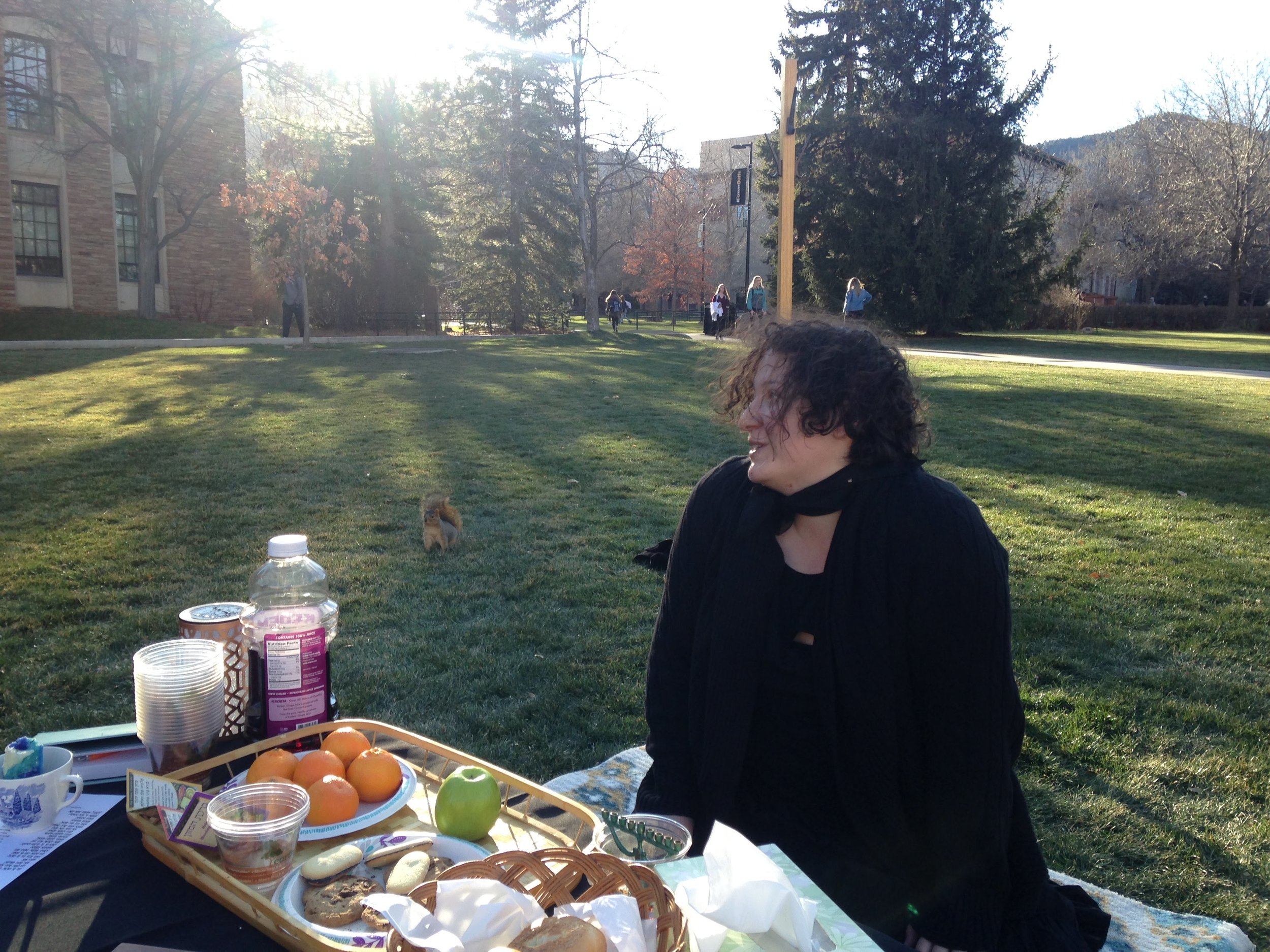
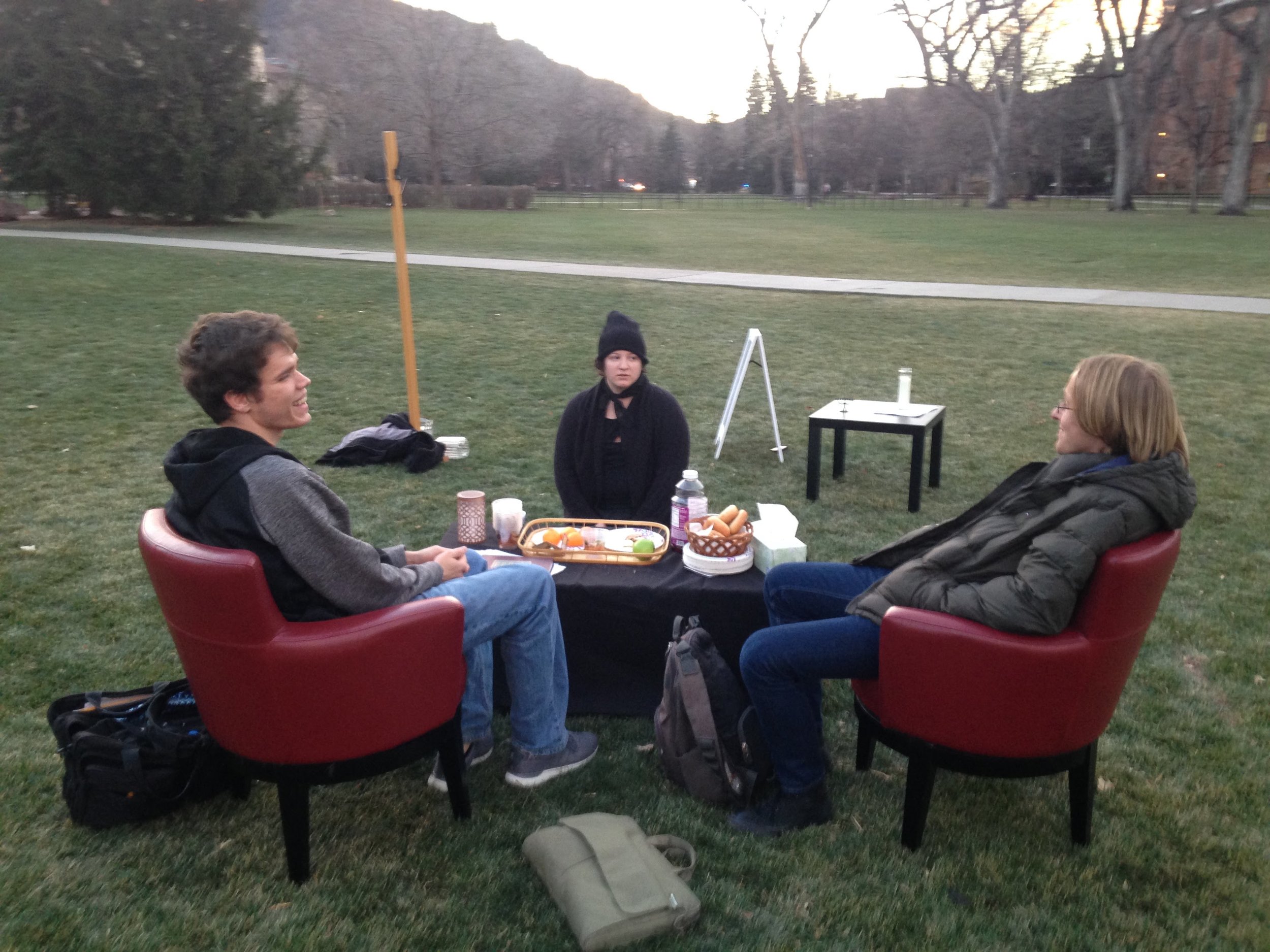
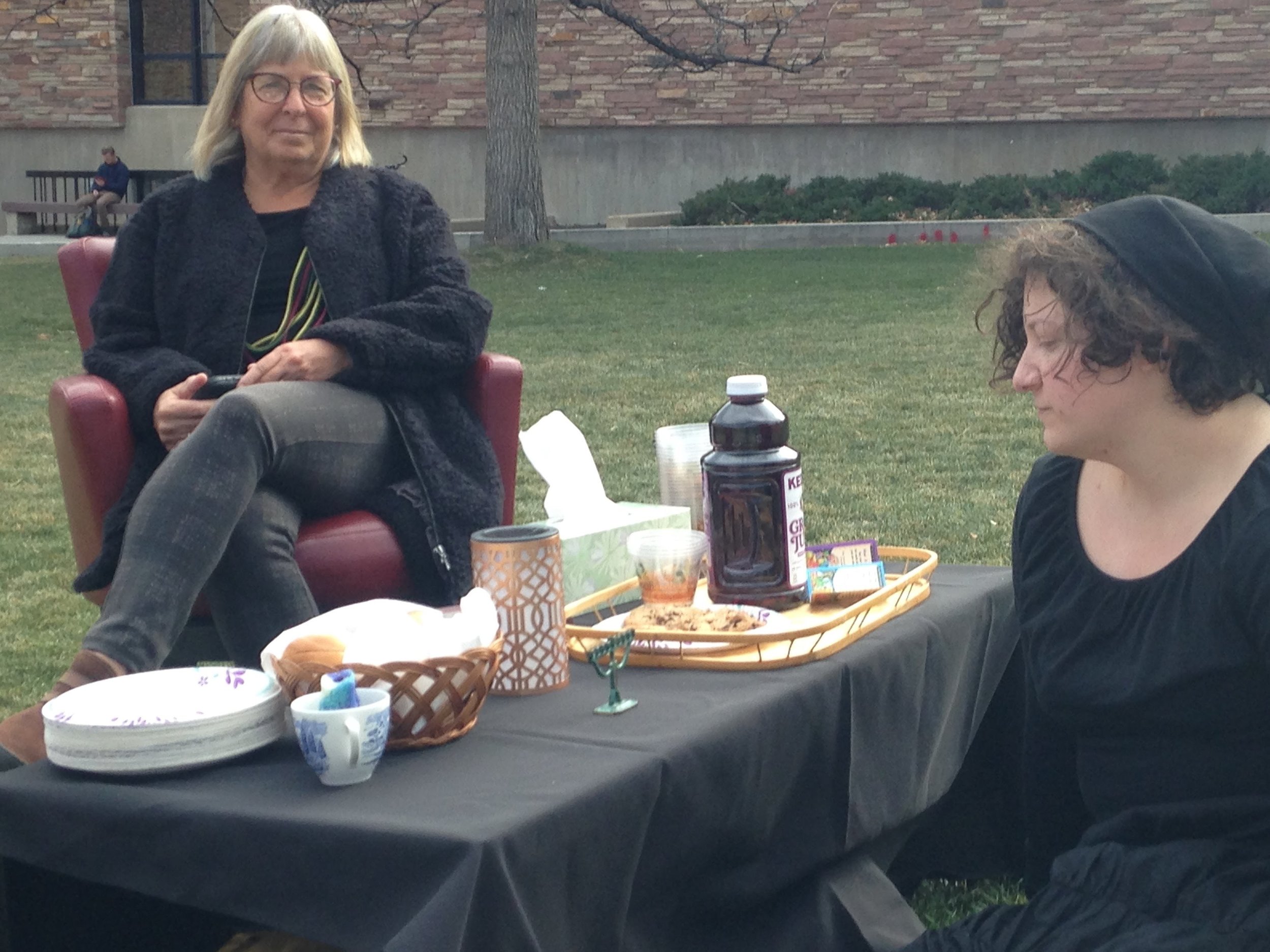
While typically shivas take place over seven days, this durational performance modeled after a shiva lasted seven hours, with each hour centered on grieving for a specific concept. This was indicated by changing a chalkboard easel sign at the top of each hour to reflect the shiva subjects listed above. I dressed in all black. Midway through the performance, I engaged in the rending of garments by using a knife to cut a gash in my shirt over my heart. As part of the performance, I created living room space on Norlin Quad; here I served food and also received gifts of food from both friends and passersby. I remained on the rug I placed in front of the coffee table for the vast majority of the seven hours, conversing with visitors while I had them and pacing its length or rocking on the ground when left to myself.

While I had intended to have each hour’s subject serve as the foundation for conversation, I found that visitors were more interested in discussing other matters. Additionally, while I originally intended to remain silent except for exclamations of grief or prayer, I found myself falling into the role of a host, encouraging my visitors to eat (like a true Jewish parent) as well as answering the questions of my visitors with regards both to Jewish mourning practices in general and my own experiences with the death of a family member. For example, my first visitor was a member of the Jewish Studies Advisory Board who was observing the 7th yahrzeit of her father’s passing. When she learned that I, too, had lost my father, she became more interested in asking me questions about that experience than in discussing her own loss. Other conversations that arose included a fellow who initially came by to tell me about how he had had both his identity and a significant amount of money stolen, but then became engrossed in a theological discussion with an enthusiastic Christian who practically rode his bike into the setup. A student in a class on engaged Buddhism also joined in the philosophical conversation. Intercultural exchange also occurred during my time on the quad--one woman wished to mourn for Turkey, telling me of its dire political status. While a father and his daughter passed through and grabbed snacks, he remarked that he was reminded of a mourning practice from his own culture: Dia de los Muertos. At the end of the night, I was largely left to my own devices. During this time I found myself lying down and looking up at the stars, silently conversing with the spirit of my father.

What I learned in producing this event was the appeal of my own vulnerability to those participating. Visitors were much more inclined to engage in a dialogue than to talk at length themselves. Engaging in this shiva also reinforced the notion of performance as a set of actions actually occurring in time and space that are themselves a re-creation/representation of actions; for me this was further complicated by the fact that I was estranged from both my father and my religious practice at the time of his death, so while this was a performance event, for me it also held the weight of functioning as an actual shiva of sorts for him. I believe that the blurring of the boundaries between the real and the imaginary also contributed to the effectiveness of this work. Which also applies to my next project!
Sitting Seven Shivas

1. Shiva for My Sanity 2. Shiva for Voices Silenced 3. Shiva for Dreaming 4. Shiva for Lost Loves 5. Shiva for Stories Unspoken 6. Shiva for Bodies I Have Inhabited 7. Shiva for Selves I Have Been


While typically shivas take place over seven days, this durational performance modeled after a shiva lasted seven hours, with each hour centered on grieving for a specific concept. This was indicated by changing a chalkboard easel sign at the top of each hour to reflect the shiva subjects listed above. I dressed in all black. Midway through the performance, I engaged in the rending of garments by using a knife to cut a gash in my shirt over my heart. As part of the performance, I created living room space on Norlin Quad; here I served food and also received gifts of food from both friends and passersby. I remained on the rug I placed in front of the coffee table for the vast majority of the seven hours, conversing with visitors while I had them and pacing its length or rocking on the ground when left to myself.

While I had intended to have each hour’s subject serve as the foundation for conversation, I found that visitors were more interested in discussing other matters. Additionally, while I originally intended to remain silent except for exclamations of grief or prayer, I found myself falling into the role of a host, encouraging my visitors to eat (like a true Jewish parent) as well as answering the questions of my visitors with regards both to Jewish mourning practices in general and my own experiences with the death of a family member. For example, my first visitor was a member of the Jewish Studies Advisory Board who was observing the 7th yahrzeit of her father’s passing. When she learned that I, too, had lost my father, she became more interested in asking me questions about that experience than in discussing her own loss. Other conversations that arose included a fellow who initially came by to tell me about how he had had both his identity and a significant amount of money stolen, but then became engrossed in a theological discussion with an enthusiastic Christian who practically rode his bike into the setup. A student in a class on engaged Buddhism also joined in the philosophical conversation. Intercultural exchange also occurred during my time on the quad--one woman wished to mourn for Turkey, telling me of its dire political status. While a father and his daughter passed through and grabbed snacks, he remarked that he was reminded of a mourning practice from his own culture: Dia de los Muertos. At the end of the night, I was largely left to my own devices. During this time I found myself lying down and looking up at the stars, silently conversing with the spirit of my father.

What I learned in producing this event was the appeal of my own vulnerability to those participating. Visitors were much more inclined to engage in a dialogue than to talk at length themselves. Engaging in this shiva also reinforced the notion of performance as a set of actions actually occurring in time and space that are themselves a re-creation/representation of actions; for me this was further complicated by the fact that I was estranged from both my father and my religious practice at the time of his death, so while this was a performance event, for me it also held the weight of functioning as an actual shiva of sorts for him. I believe that the blurring of the boundaries between the real and the imaginary also contributed to the effectiveness of this work. Which also applies to my next project!
IMG_2170.JPG
IMG_2188.JPG
IMG_2166.JPG
IMG_2202.JPG
IMG_2206.jpg