Your Custom Text Here
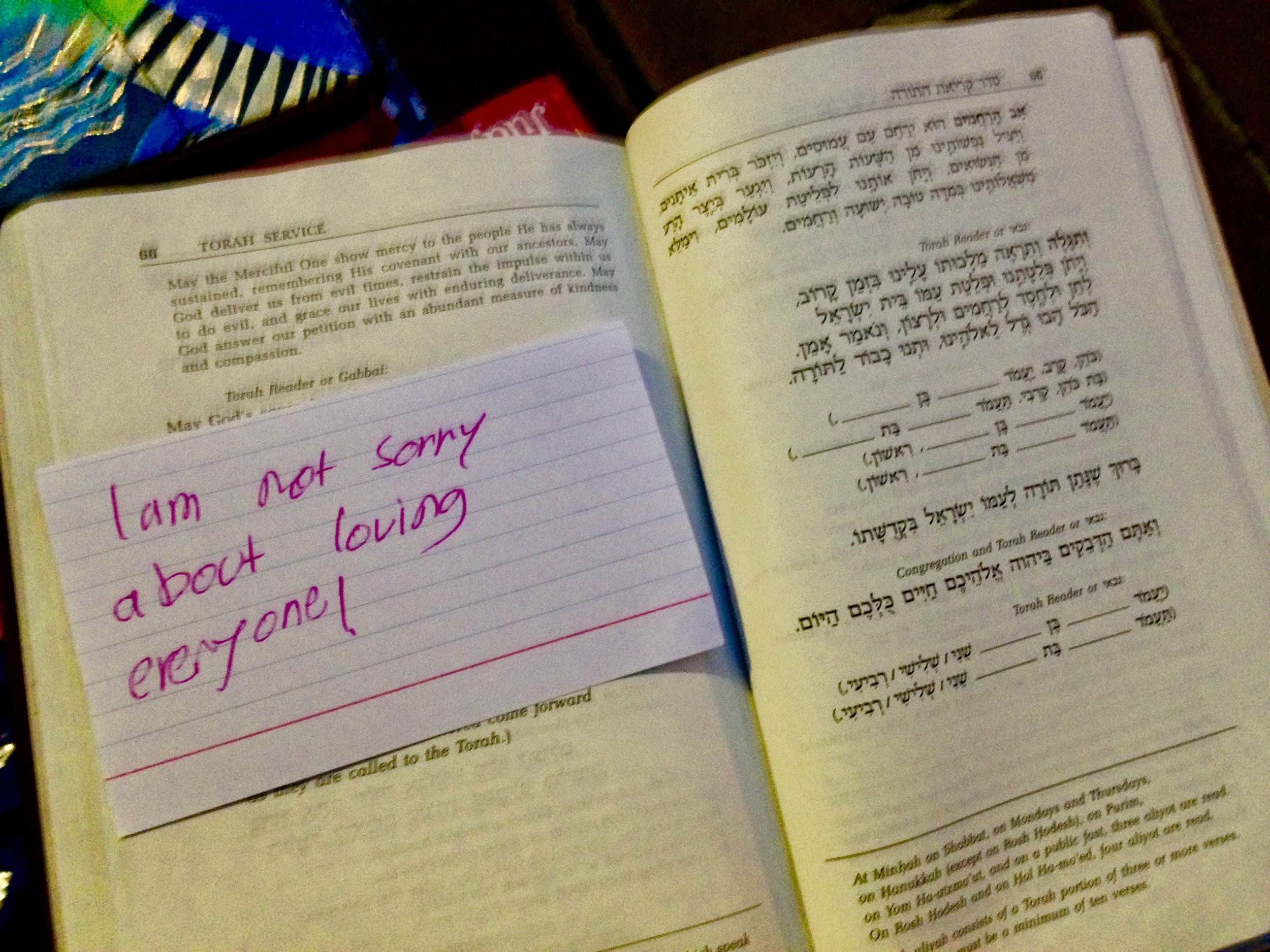
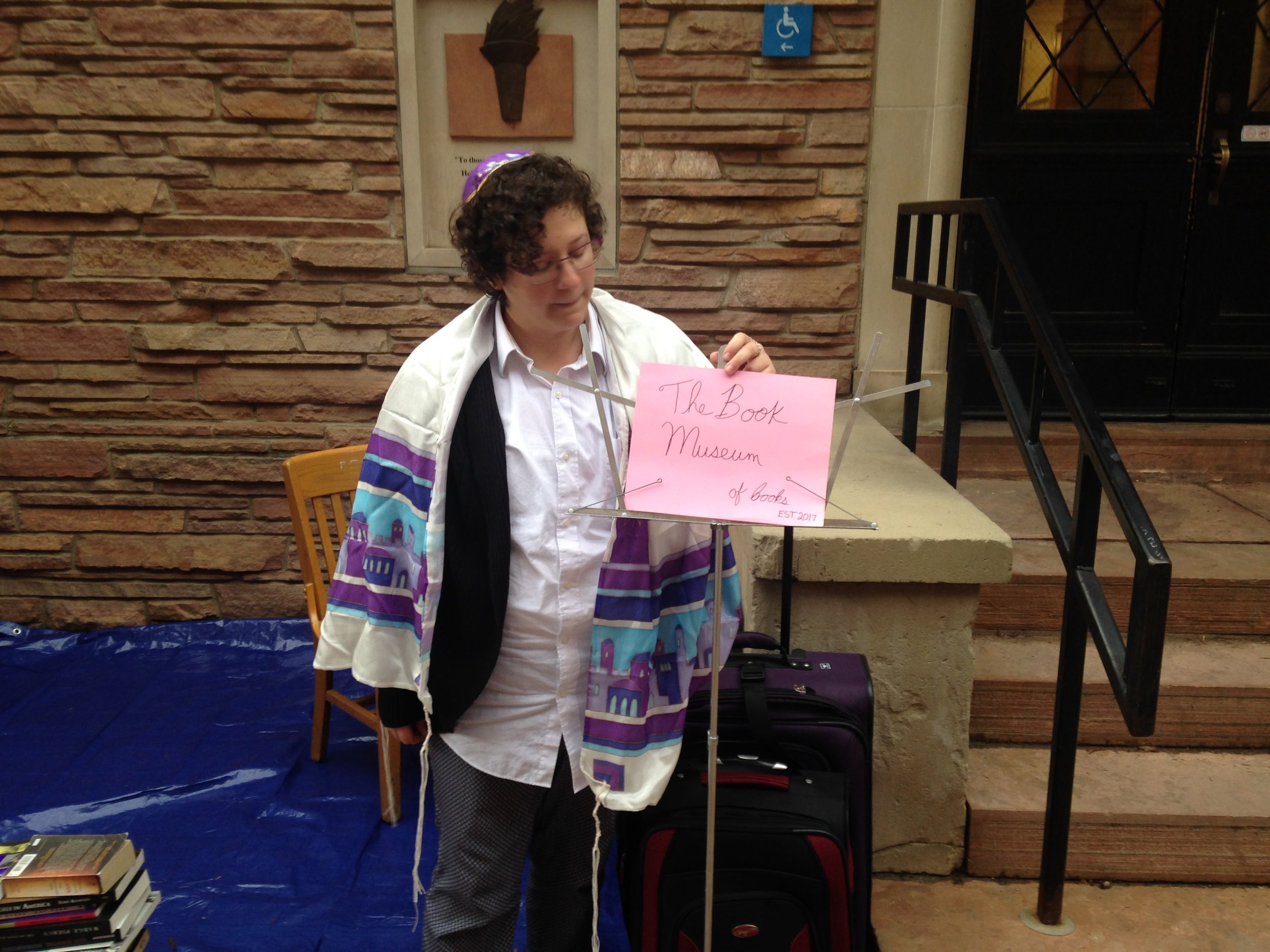
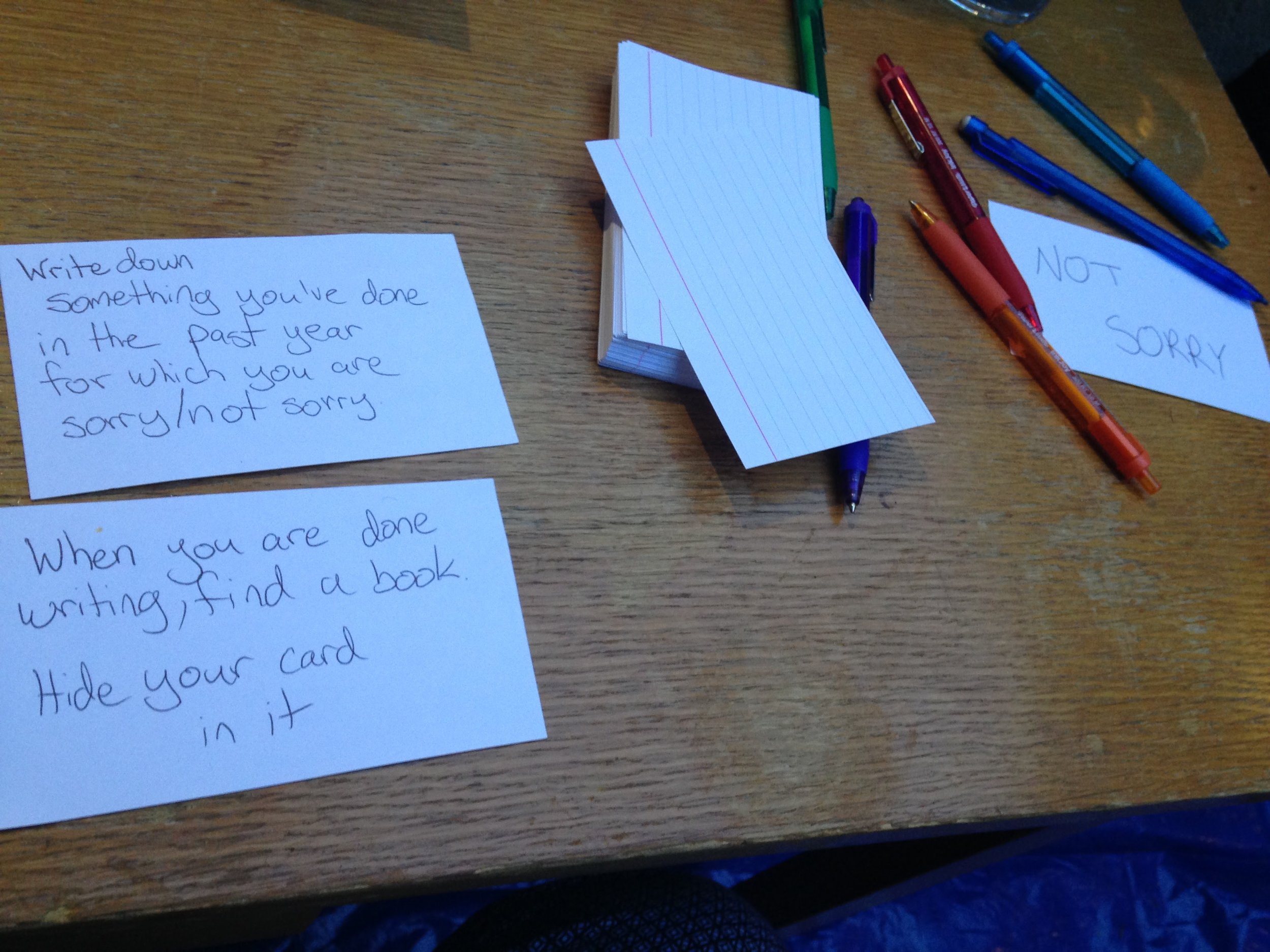
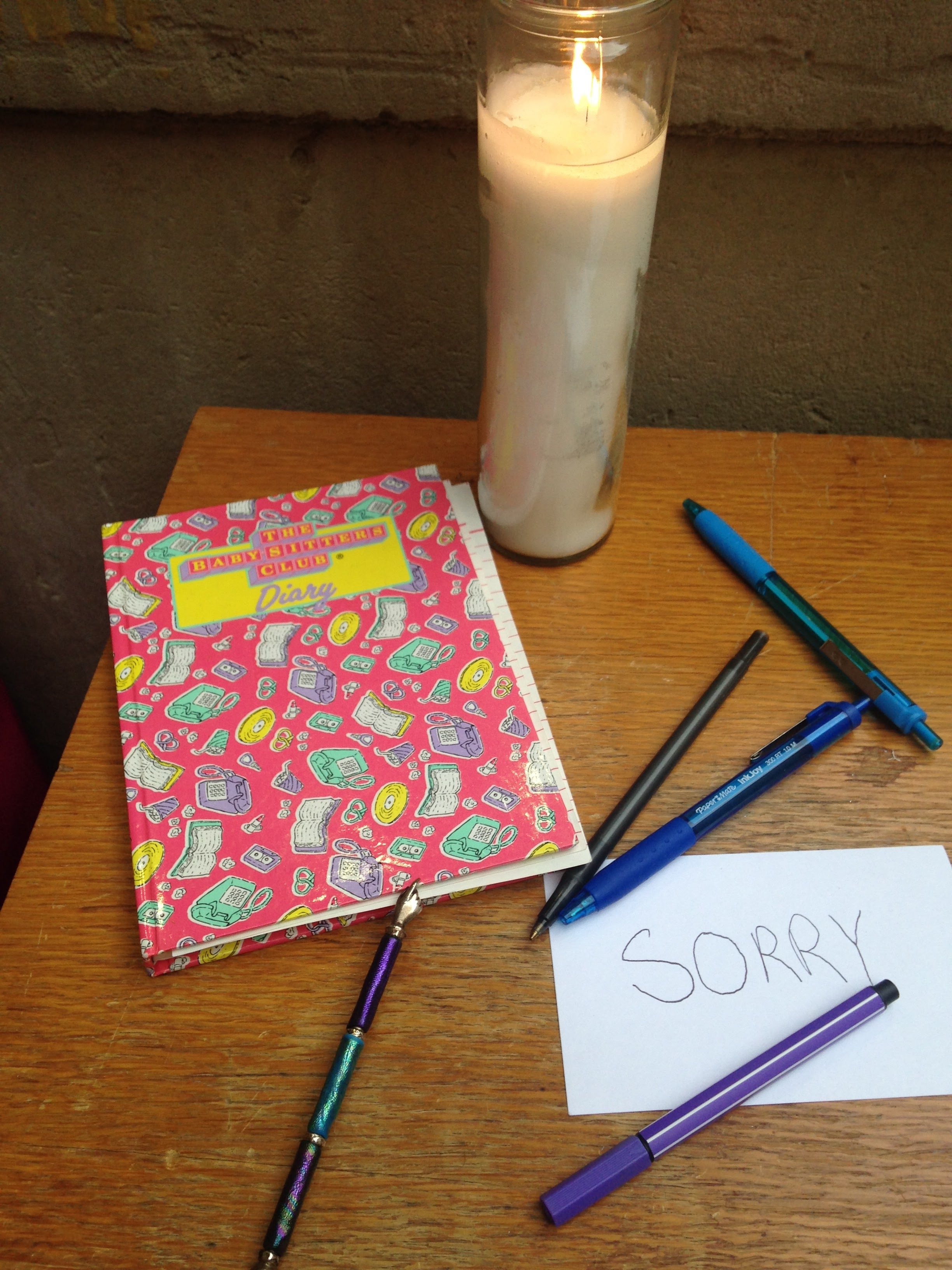
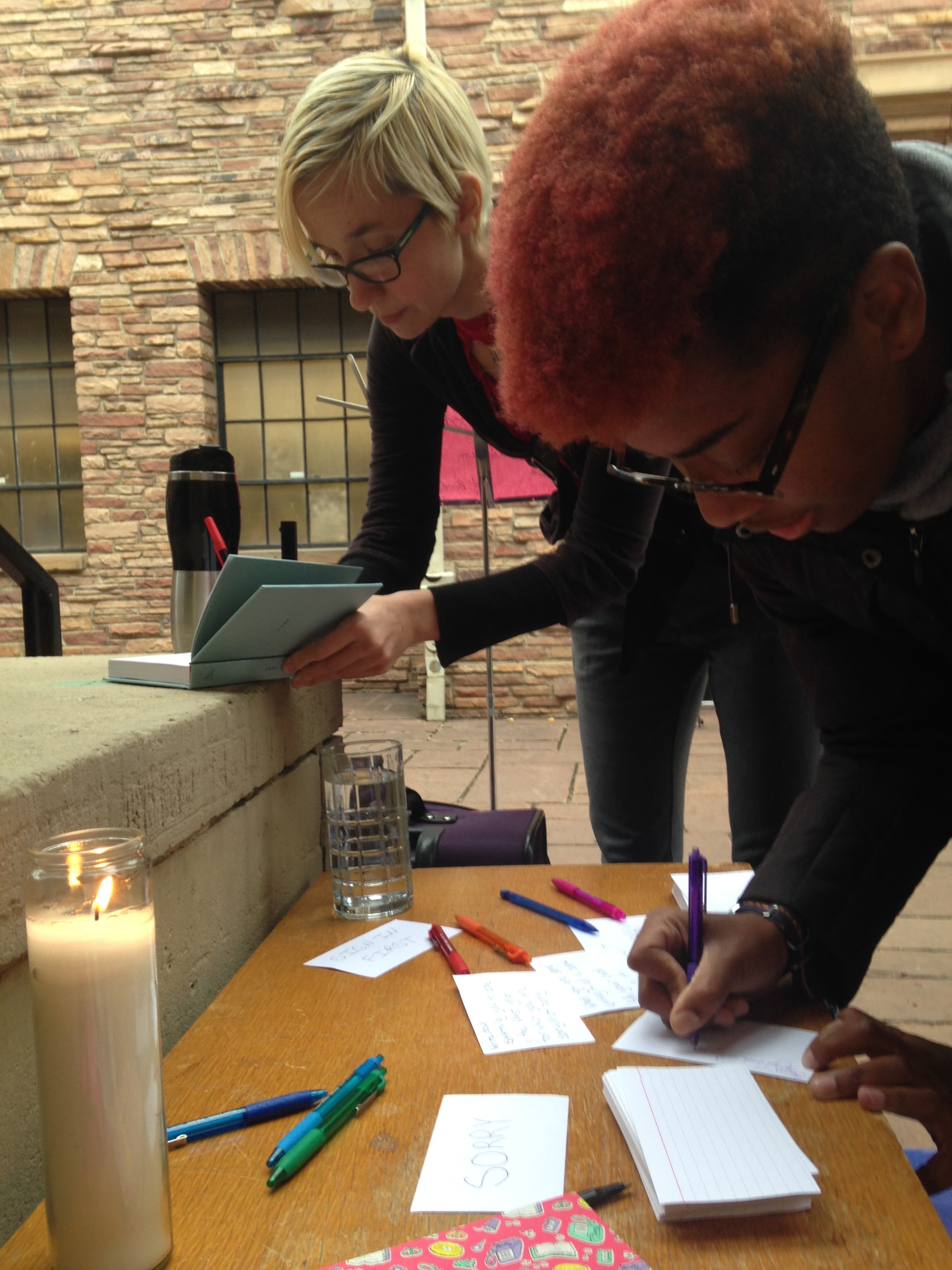
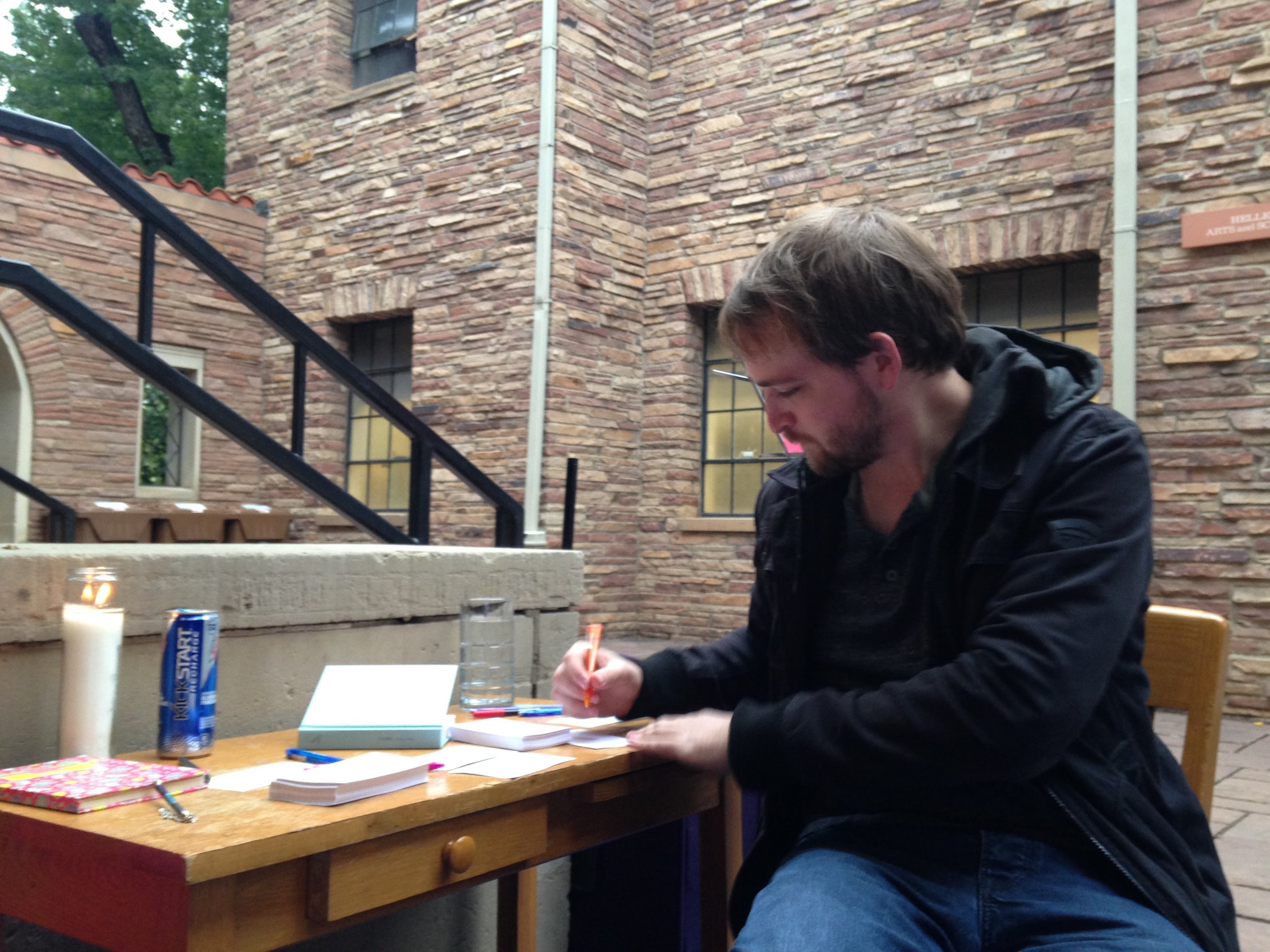
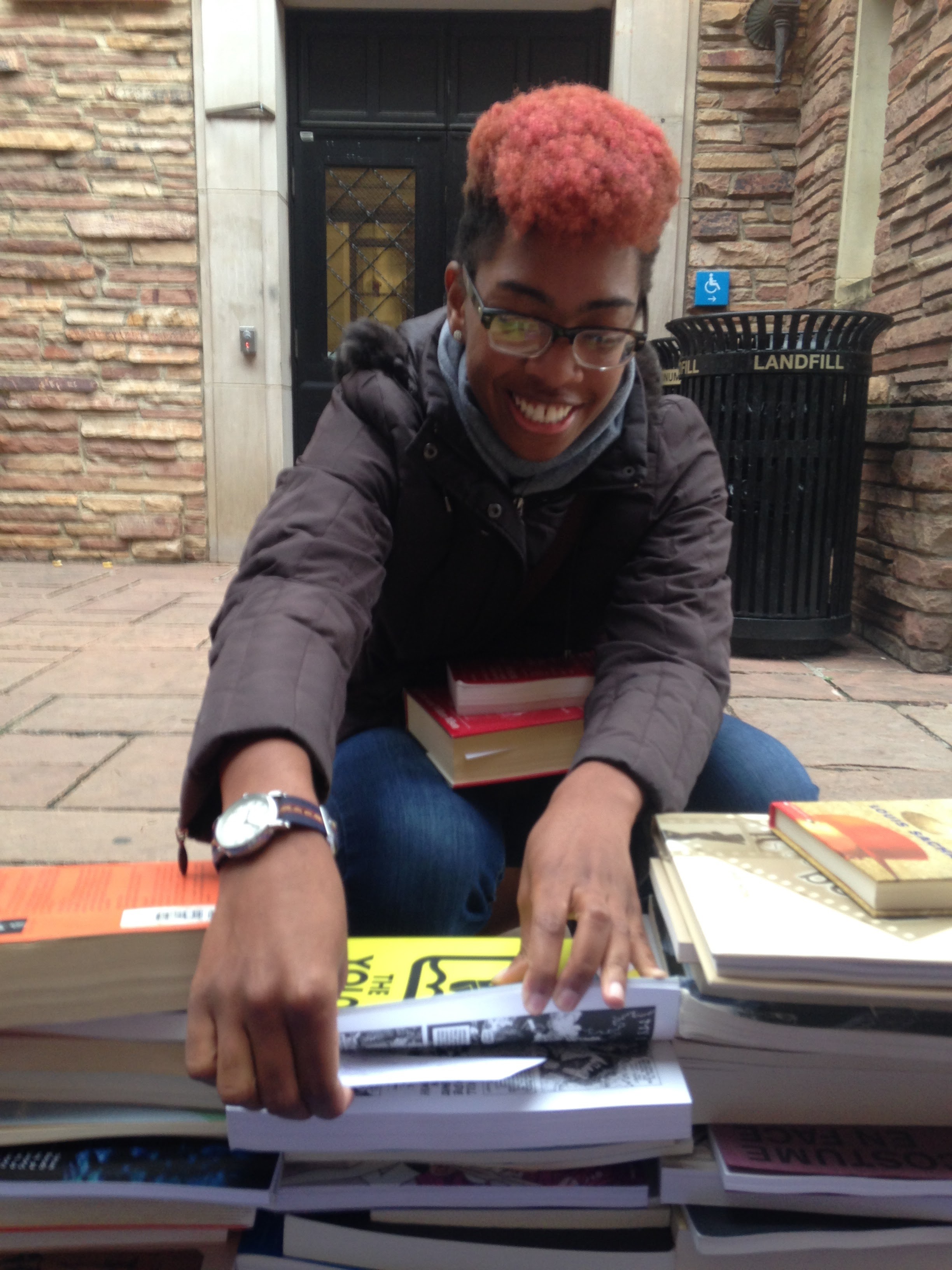
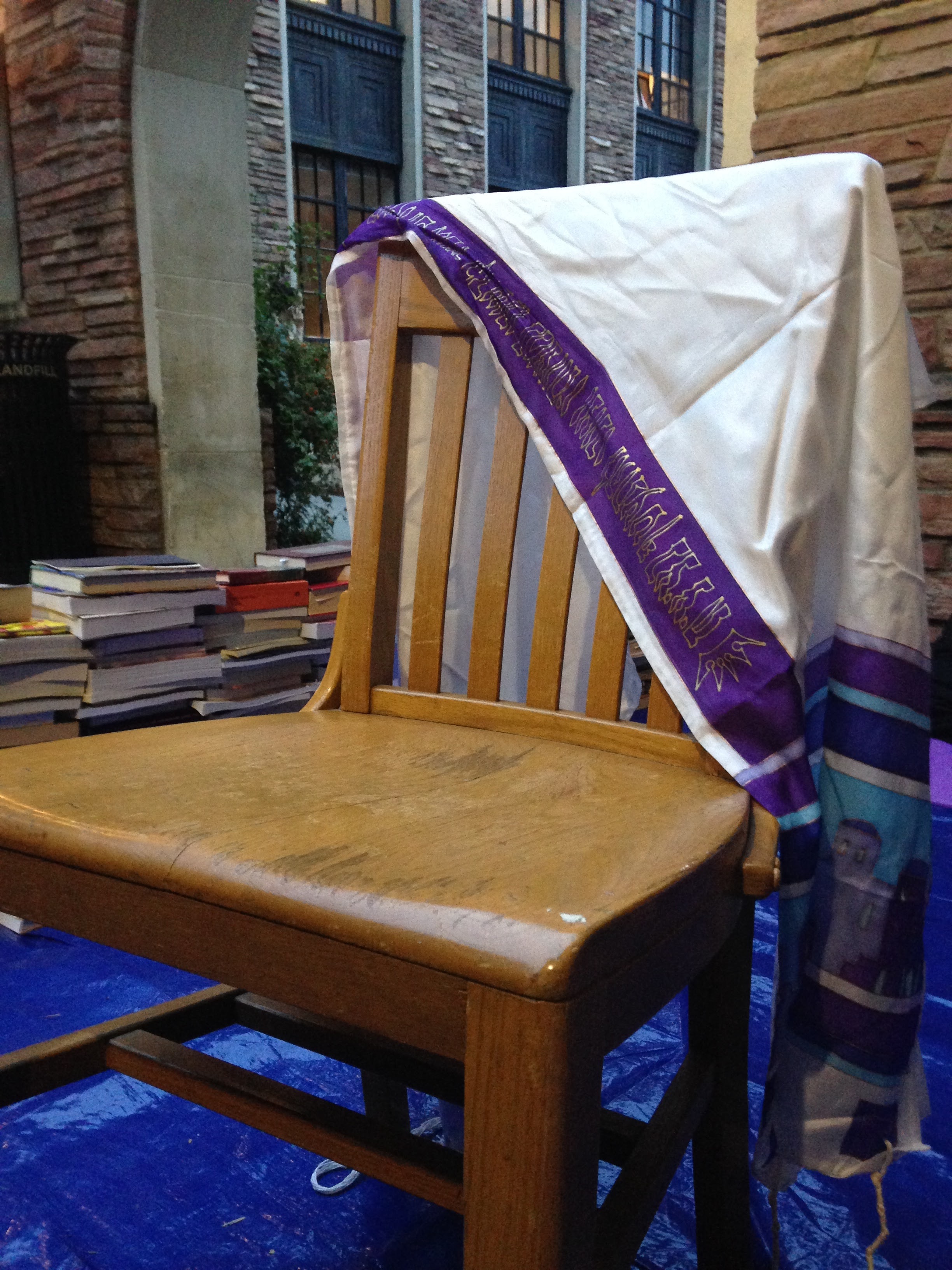
In September, two days before Yom Kippur, I created a participatory installation centered around a fictitious museum, “The Book Museum of Books.” The museum space was designated using a tarp--which was also there to keep objects off of the wet ground--and front-facing wall made of the vast majority of the books I own. Once inside the space, visitors were invited to interact with a wooden desk on which lay a sign-in book (in which visitors were to write down their name, the time, and their favorite book), a lit candle, a glass of water, pens, blank index cards, and index cards with the instructions, “Write down something you’ve done in the past year for which you are sorry/not sorry. When you are done writing, find a book. Hide your card in it.” I was attired in a kippah and tallit and remained in the space from 2pm until sundown. In addition to published volumes, included in the wall of books were old diaries of mine, a poetry chapbook from my 8th grade English class, and an envelope full of letters to a friend that I never sent. A siddur also sat atop the book wall. Approximately twenty four people actively engaged in the full activity; others recognized my religious garb and wished me “Shanah tovah” or “G’mar chatimah tovah”: still others asked about what the project was before wishing me well and walking away.
This project reinforced the importance of the book as a tactile, physical object. Culturally specific ways of interacting with books also reflect the performative act of engaging with such objects. For example, one participant placed a graphic novel on top of the siddur. Shortly afterwards, a Jewish visitor noticed that the graphic novel was covering the siddur, then hurriedly moved the graphic novel aside before picking up and kissing the siddur. This enacted a religious narrative at the intersection of body and book! I learned, too, the value of being actively present in the performance space. Initially, I attempted to remain quiet while seated in the corner of the museum, writing in a notebook, hoping that passersby would enter of their own volition. This was not the case. I found I needed to act as a barker of sorts, enthusiastically inviting outsiders to engage. It was a performance approach I would adopt (though in a quieter fashion) with my next participatory installation.
In September, two days before Yom Kippur, I created a participatory installation centered around a fictitious museum, “The Book Museum of Books.” The museum space was designated using a tarp--which was also there to keep objects off of the wet ground--and front-facing wall made of the vast majority of the books I own. Once inside the space, visitors were invited to interact with a wooden desk on which lay a sign-in book (in which visitors were to write down their name, the time, and their favorite book), a lit candle, a glass of water, pens, blank index cards, and index cards with the instructions, “Write down something you’ve done in the past year for which you are sorry/not sorry. When you are done writing, find a book. Hide your card in it.” I was attired in a kippah and tallit and remained in the space from 2pm until sundown. In addition to published volumes, included in the wall of books were old diaries of mine, a poetry chapbook from my 8th grade English class, and an envelope full of letters to a friend that I never sent. A siddur also sat atop the book wall. Approximately twenty four people actively engaged in the full activity; others recognized my religious garb and wished me “Shanah tovah” or “G’mar chatimah tovah”: still others asked about what the project was before wishing me well and walking away.
This project reinforced the importance of the book as a tactile, physical object. Culturally specific ways of interacting with books also reflect the performative act of engaging with such objects. For example, one participant placed a graphic novel on top of the siddur. Shortly afterwards, a Jewish visitor noticed that the graphic novel was covering the siddur, then hurriedly moved the graphic novel aside before picking up and kissing the siddur. This enacted a religious narrative at the intersection of body and book! I learned, too, the value of being actively present in the performance space. Initially, I attempted to remain quiet while seated in the corner of the museum, writing in a notebook, hoping that passersby would enter of their own volition. This was not the case. I found I needed to act as a barker of sorts, enthusiastically inviting outsiders to engage. It was a performance approach I would adopt (though in a quieter fashion) with my next participatory installation.